Exploring the necessity of VPN for Trust Wallet users Trust Wallet + VPN: Really Necessary?
Trust Wallet has become the default self-custody wallet for millions of crypto holders,and the question keeps popping up: do I actually need a VPN on top? The short answer is noExploring the necessity of VPN for Trust Wallet users, not by default. But the longer answer depends on where you connect, who's watching your traffic, and what you're doing with your wallet. I've spent a decade in network security and managed my own crypto through Trust Wallet since 2021, so let me walk through the practical cases that matter.
The threats that make a VPN worthwhile are very specific. On public Wi-Fi at a coffee shop or airport,your traffic is exposed to packet sniffers in plain sight. An aggressive ISP or government-operated network can log which domains you hitExploring the necessity of VPN for Trust Wallet users Trust Wallet + VPN: Really Necessary?, flagging that you visited a DeFi dApp or a privacy-focused exchange. Connecting to untrusted networks while interacting with your Trust Wallet is where a VPN earns its keep. If you're operating in a region with strict surveillance or frequent DNS poisoning, a WireGuard-based tunnel hides your metadata from local interceptors and makes it far harder to correlate your on-chain activity with your physical location.
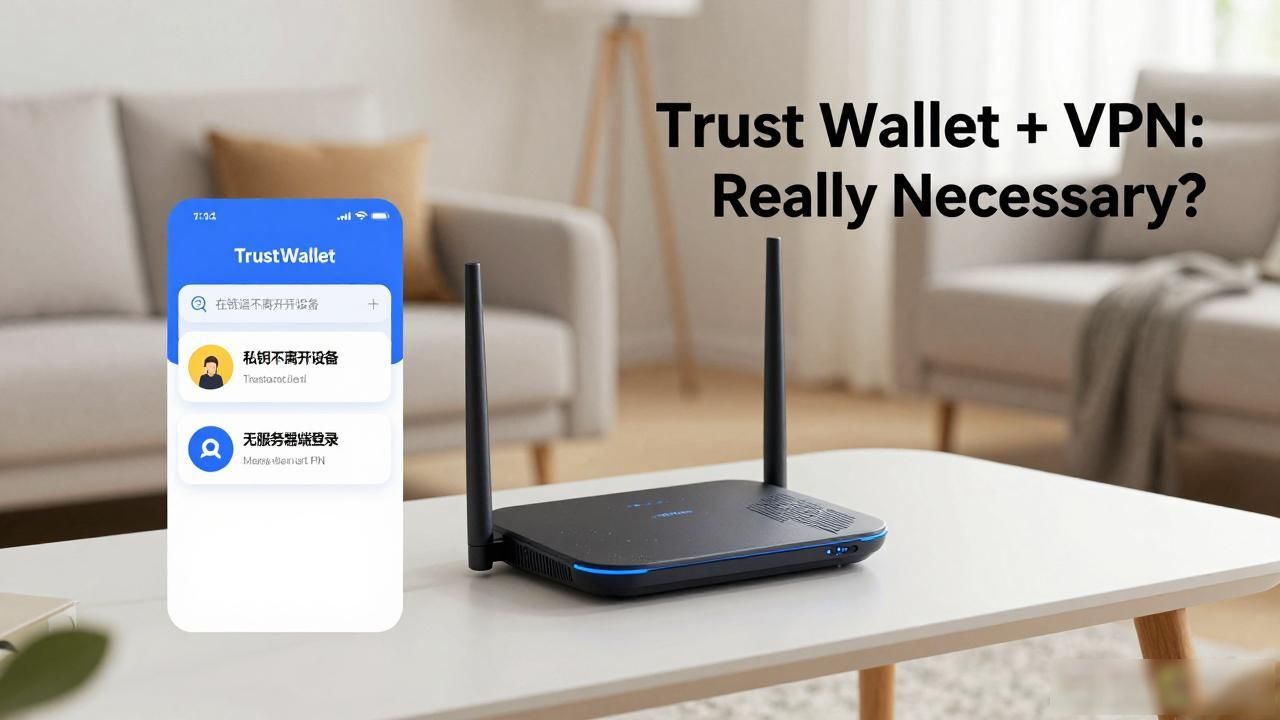
There are plenty of scenarios where adding a VPN is pure noise. Your home fiber connection, with a reputable ISP and a standard router firewall, already isolates you from casual sniffing. Trust Wallet operates as a non-custodial app; your private keys never leave the device. No server-side login means there's no remote account to phish. Layering a VPN on top of that secure home setup adds measurable latency, drains your battery faster, and occasionally breaks the WebSocket connections that Trust Wallet relies on for real-time price feeds and RPC calls to decentralized nodes.
If you do run a VPN alongside Trust Wallet, pick a kill-switch-capable WireGuard or OpenVPN client rather than a sketchy free app that logs your IP. Set the protocol to UDP, enable split tunneling so only your crypto traffic routes through the tunnel, and disable the "follow system" browser proxy on mobile. One more thing: never route your entire device through a datacenter IP if you plan to hit exchange APIs, because most exchanges actively block cloud-hosted exit nodes and will flag your transactions for review.
A VPN is a situational tool, not a mandatory layer for every Trust Wallet user. Use it when the network beneath you is hostile. Leave it off when your connection is clean and your ISP is trustworthy. Your keys are safe either way; the only real variable is who gets to see you looking at them.